
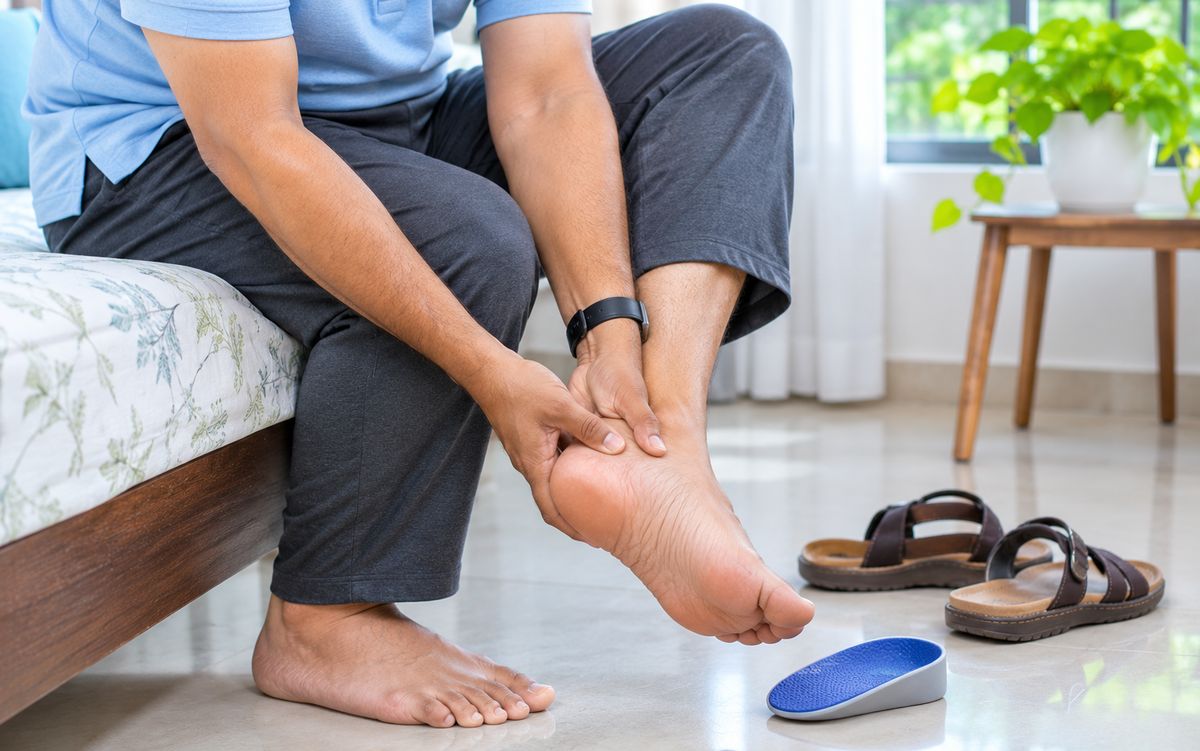
Dr. Soham Dinda, Consultant Orthopaedic and Trauma Surgeon in Tamluk, Purba Medinipur (MBBS Hons, NRSMCH; MS Orthopaedics, RG Kar MC&H), explains plantar fasciitis, heel spur: symptoms, causes, tests and treatment options.
What causes heel pain?
The most common cause of heel pain is plantar fasciitis, irritation of the thick band of tissue (plantar fascia) that runs under the foot from the heel to the toes. It causes a stabbing pain in the heel, typically with the first steps after waking up or after sitting for a while, that eases as you walk and returns later in the day.
Many people are told they have a heel spur, a small bony growth seen on X-ray. A spur is often a by-product of long-standing strain, and in most cases the pain comes from the inflamed tissue and not from the spur itself.
Risk factors
- Standing or walking on hard floors for long hours
- Being overweight
- Flat feet or high arches
- Tight calf muscles
- Thin, hard or worn-out footwear, or walking barefoot on hard surfaces
- Sudden increase in walking, running or sports
- Age between 40 and 60
Symptoms
- Sharp, stabbing pain at the bottom of the heel on the first steps in the morning
- Pain after long sitting, which eases then returns by evening
- Tenderness when pressing the inner part of the heel
- Pain after, not usually during, exercise
Pain with swelling, redness, numbness, burning or pain at night should be examined for other causes such as Achilles tendon problems, a stress fracture, nerve entrapment or arthritis.
How heel pain is diagnosed
Diagnosis is mainly clinical, from your history and the point of tenderness. An X-ray is advised if a stress fracture or other bone problem is suspected, and an ultrasound or MRI is used in stubborn or unusual cases. Blood tests may be advised for inflammatory conditions or uric acid when needed.
Treatment: most people improve without surgery
Over 90 per cent of people with plantar fasciitis improve with conservative treatment, although recovery can take several weeks to months, so patience and regular exercise matter.
- Plantar fascia and calf stretches several times daily, especially before getting out of bed
- Soft, supportive footwear with a cushioned heel, and avoiding barefoot walking on hard floors
- Heel cushions or silicone heel cups, or custom insoles for flat feet
- Cold pack massage under the foot, using a frozen bottle rolled under the arch
- Short-term pain medicines and gels as advised
- Weight reduction if overweight
- Night splints and physiotherapy in stubborn cases
- Injection or other procedures in selected cases that do not respond after proper trial of the above
Surgery is rarely needed and is kept for pain that has not settled after many months of proper treatment.
Easy daily plan for heel pain
- Before getting out of bed, pull your toes towards you for 20 to 30 seconds, repeat 3 times
- Wear chappals or shoes with a cushioned sole even at home
- Roll a cold bottle under your foot for 5 to 10 minutes in the evening
- Do wall calf stretches morning and night
- Increase walking gradually instead of suddenly
Heel pain treatment in Tamluk
If heel pain is disturbing your morning walk or work, Dr. Soham Dinda can examine you, find the exact cause and guide you with a practical, low-cost plan. Patients from Tamluk, Mahishadal, Haldia and nearby areas are welcome.
সংক্ষেপে বাংলায়
সকালে ঘুম থেকে উঠে প্রথম কয়েক পা ফেলতেই গোড়ালিতে তীব্র ব্যথা হলে সেটা সাধারণত প্ল্যান্টার ফ্যাশিআইটিস। অনেকে একে গোড়ালিতে কাঁটা বা হিল স্পার বলেন। বেশিরভাগ রোগী সঠিক স্ট্রেচিং, নরম জুতো-চটি ও হিল কুশনে ভালো হয়ে যান, অপারেশন প্রায় লাগেই না। তমলুকে পরামর্শের জন্য ফোন করুন ৮৯১০০৫১০৭২।
This page is for general awareness and does not replace a consultation. Please see a qualified doctor for diagnosis and treatment.